
Communication is essential in psychology. A psychologist's skills and experience don’t mean much if they can’t communicate well. Every conversation offers valuable insights into a person’s thoughts, feelings, and behavior. Communication builds trust and guides assessments and therapy. It forms the foundation of all psychological interactions.
— Communication Across the Lifespan
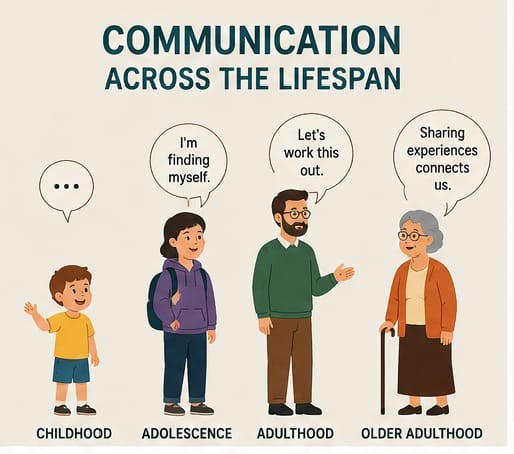
We aren’t born with communication skills; they develop and change throughout our lives.
- Children express themselves with simple language and non-verbal cues.
- Adolescents share their growing independence and emotions.
- Adults communicate to build relationships, solve problems, and manage responsibilities.
- Older adults often rely on communication to keep social connections and share life experiences.
- Recognizing these differences helps psychologists tailor their approach to each individual’s needs.
— Why Communication Matters in Psychology
Good communication allows psychologists to create a safe and supportive environment. Clients feel more comfortable sharing their concerns in these settings. Clear communication helps professionals gather accurate information, understand emotions, and develop appropriate treatment plans. It is crucial in counseling, therapy, research, and community mental health programs. Without clear and empathetic communication, misunderstandings can arise and reduce the effectiveness of psychological support.
— The Importance of Communication Skills
Effective communication involves more than just talking. It includes:
- Active listening: Paying full attention to the speaker.
Example: Listening without interrupting. - Empathy: Understanding another person’s feelings.
Example: Saying, “I understand how you feel.” - Appropriate body language: Using eye contact, a smile, and an open posture.
Example: Nodding while the other person is speaking. - Asking thoughtful questions: Encouraging others to share more.
Example: “Can you tell me more about that?”
These skills help psychologists build connections and encourage clients to express themselves openly. They also help resolve conflicts, strengthen relationships, and promote emotional well-being. Since communication styles differ across age groups and cultures, psychologists need to be flexible and sensitive to individual differences.
— Effective Communication in Daily Life
- Listen carefully: Give the other person your full attention and avoid interrupting.
- Speak clearly and respectfully: Use simple words and a polite tone to express your thoughts.
- Show empathy: Try to understand how the other person feels before responding.
- Use positive body language: Maintain eye contact, smile, and use friendly gestures during conversations.
- Ask questions and be open to feedback: Encourage others to share their opinions and listen to their suggestions.
Conclusion
Communication is more than just sharing information; it is vital for understanding people. By adjusting communication to different life stages and practicing empathy and active listening, psychologists can build stronger relationships and provide better support. Whether working with children, adolescents, adults, or older adults, effective communication remains one of the most powerful tools in psychology.
Blog by: Vrinderpreet Singh Sidhu