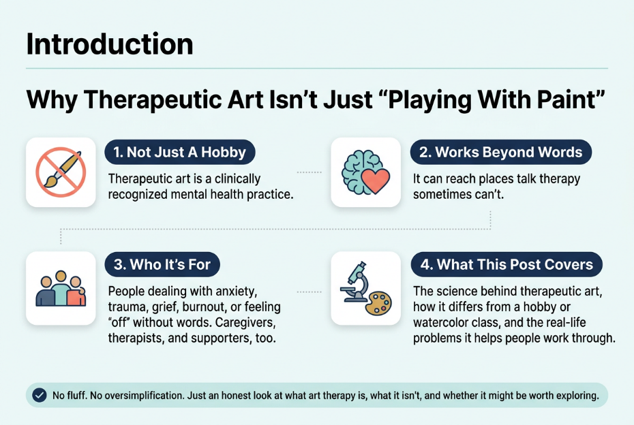
Therapeutic art is a clinically recognized mental health practice, and it works in ways that talk therapy sometimes can't reach.
In this, you'll get a clear look of how it differs from a fun hobby or weekend water color class, and the real-life problems it helps people work through.
The Guided Intention Behind Every Session
The biggest distinction lies in intention. Your therapist isn’t just handing you a canvas and saying “go wild.” They’ve thought carefully about what materials you’re working with, what prompts or themes they’re introducing, how structured or open-ended the activity should be, and what they’re watching for as you create.
You don’t need to be thinking about any of this consciously while you create. In fact, the most powerful moments in art therapy often happen when you’re deeply absorbed and not overthinking.
- Processing Trauma Without Words
Sometimes the worst things that happen to you don’t come with words attached. This is where therapeutic art changes the game. You just need to show up and make something.
2. Managing Anxiety and Chronic Stress
Anxiety lives in the “what if” — Art yanks you back into the present moment.
For people living with chronic stress — trauma survivors, those navigating high-pressure careers — therapeutic art offers something medication and breathing exercises alone.
3. Supporting Recovery From Grief and Loss
Your grief is not a problem to be solved. It’s a reflection of how much you loved someone. Therapeutic art treats it with that kind of respect.
How to Access and Start Therapeutic Art
1. Finding a Qualified Art Therapist
You’re not just looking for someone who likes crafts and has a calming playlist — you’re looking for a trained clinician.
2. How to Know If It Is Working for You
Therapy of any kind takes time, and art therapy is no different.
3. Signs That Progress Is Happening
It’s rarely a dramatic breakthrough — more often, it shows up in quieter ways:
You start to notice patterns in your artwork, You feel a little lighter after sessions, You’re more able to name your emotions.
Therapeutic art goes far deeper than picking up a brush and having fun with colors. It’s a research-based practice that works on your emotions, mental health, and even trauma in ways that traditional talk therapy sometimes can’t reach.
From understanding the science behind it to knowing exactly who it can help, one thing becomes clear — this is serious, meaningful work dressed in a creative package.
Basic small art therapy technique anyone can do in everyday life:
Emotion Color Doodling
It takes about 5 to 10 minutes and requires a blank piece of paper along with some colored pens, pencils, or crayons.
Before you start, pause and ask yourself, “How am I feeling right now?”
Don’t overthink it, just pay attention to your emotions.
Next, choose colors that match those feelings. (e.g., orange for curiosity, blue for calm, red for stress).
Now let your hand move freely on the page. Draw lines, circles, waves, dots, spirals, or any patterns that feel right. There’s no need to create a picture or make it look pretty.
The goal is to express your emotions.
After 5 to 10 minutes, take a look at what you’ve created.
Ask yourself some questions:
What emotions do I see in my drawing?
Which colors or shapes stand out?
Do I feel different from before?
Doing Emotion Color Doodling for a few minutes each day can be a helpful self-care routine. Over time, your drawings might reveal patterns in your mood, helping you understand your emotions better.
Remember, in art therapy, there is no right or wrong way to create. Every line, color, and mark tells your story. The key is not how your drawing looks but how it makes you feel.
Blog By Diya Majhi