

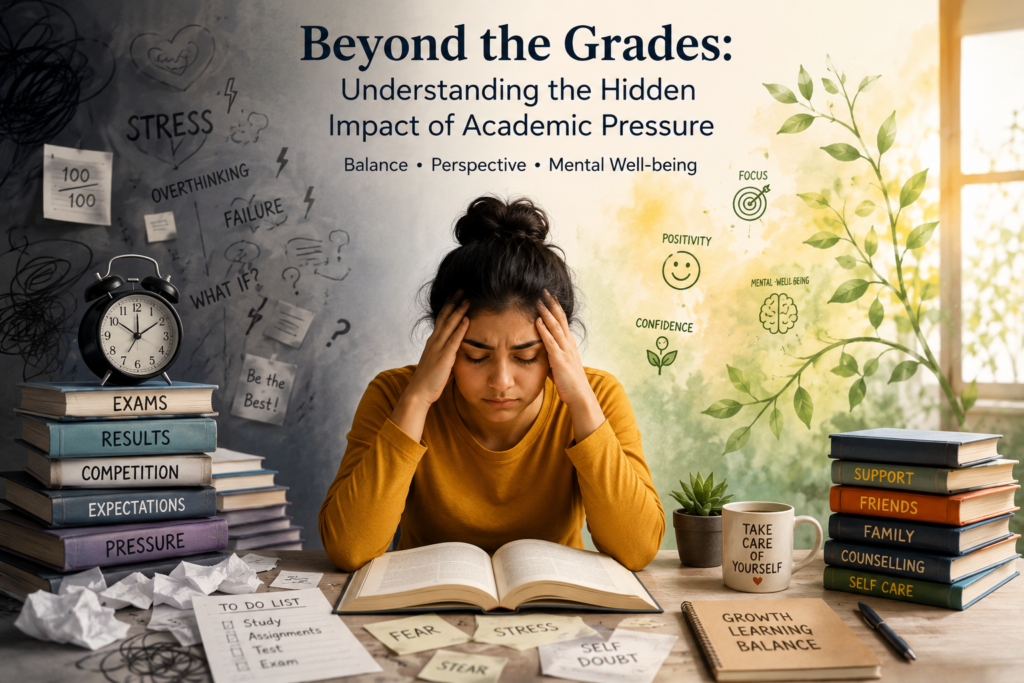
"Study harder." "Score better."
"Don't waste your potential."
These are phrases that many students hear throughout their academic journey. While they are often intended to encourage success, they can also create immense psychological pressure. In today’s competitive environment, academic achievement is frequently treated as the primary indicator of intelligence and future success. As a result, many students begin to associate their self-worth with their grades, often at the expense of their mental well being.
Mental health is much more than the absence of a mental illness. It influences how we think, feel, behave, handle stress, and relate to others. A mentally healthy student is not someone who is happy all the time, but someone who can experience different emotions, cope with challenges, learn from mistakes, and seek support when needed.
When academic pressure becomes excessive, it can interfere with these aspects of mental health. Students may constantly worry about examinations, compare themselves with others, or fear disappointing their families and teachers. Instead of viewing mistakes as opportunities for growth, they may begin to see them as personal failures. This pattern often increases stress and reduces confidence.
From a psychological perspective, perception also plays an important role. Two students may receive the same marks, yet interpret them very differently. One may see the result as motivation to improve, while another may believe they are “not good enough.” This difference occurs because our thoughts and personal beliefs influence how we interpret the same situation. Over time, negative perceptions can lead to self-doubt, anxiety, and reduced motivation.
Prolonged academic stress may eventually result in burnout, a state of emotional, mental, and physical exhaustion caused by continuous pressure. Students experiencing burnout often lose interest in studying, struggle to concentrate, feel constantly tired, and may withdraw from friends or activities they once enjoyed. Ironically, working harder without adequate rest often reduces productivity instead of improving it.
Psychology also teaches us that motivation is influenced by more than external rewards such as marks or praise. According to Maslow’s Hierarchy of Needs, students perform their best when their basic needs, sense of safety, belonging, and self-esteem are supported. Similarly, Herzberg’s Two-Factor Theory reminds us that while external factors like grades or rewards may prevent dissatisfaction, genuine motivation grows through personal achievement, recognition, growth, and meaningful learning experiences.
Managing academic pressure therefore requires more than simply studying longer hours. Developing healthy coping strategies is equally important. Setting realistic goals, maintaining a balanced routine, getting enough sleep, engaging in physical activity, and taking regular breaks all contribute to psychological well-being. Equally important is building supportive relationships with family, teachers, and friends, as strong social support helps individuals cope more effectively with stress.
There is also a common misconception that seeking help is a sign of weakness. In reality, reaching out to a counsellor or psychologist reflects self awareness and emotional strength. Counsellors provide a safe, non judgmental space where students can explore their concerns, understand their emotions, develop coping strategies, and make informed decisions. Through active listening and empathy, they help individuals navigate challenges rather than solve problems for them.
Academic success is undoubtedly valuable, but it should never come at the cost of mental health. Education should encourage curiosity, resilience, and personal growth—not constant fear of failure. When students learn to value
both achievement and well-being, they become more confident, adaptable, and better prepared to face future challenges.
At the end of the day, grades may open opportunities, but good mental health empowers us to make the most of those opportunities. True success is not just measured by marks on a report card, but by our ability to learn, grow, cope with challenges, and maintain our overall well-being.
Blog By : Divyanshi Pandey