

Rearranging Our Outlook: Why True Mental Health is More Than Just the Absence of Illness

While the importance of counselling and therapy is frequently discussed today, these terms are still often associated with negative mental sets. For instance, when we hear a person is seeking counselling, our first reaction is often to wonder, "What is wrong with him?"

“Nobody actually thinks, ‘Great for him. He is finally trying to rearrange his life, actively taking help to understand life, and looking at things with a better, more positive outlook.'”

This is precisely where a field that is lesser-known, yet extremely helpful in day-to-day functioning, comes into view: positive psychology.

Broadening Our Mindset

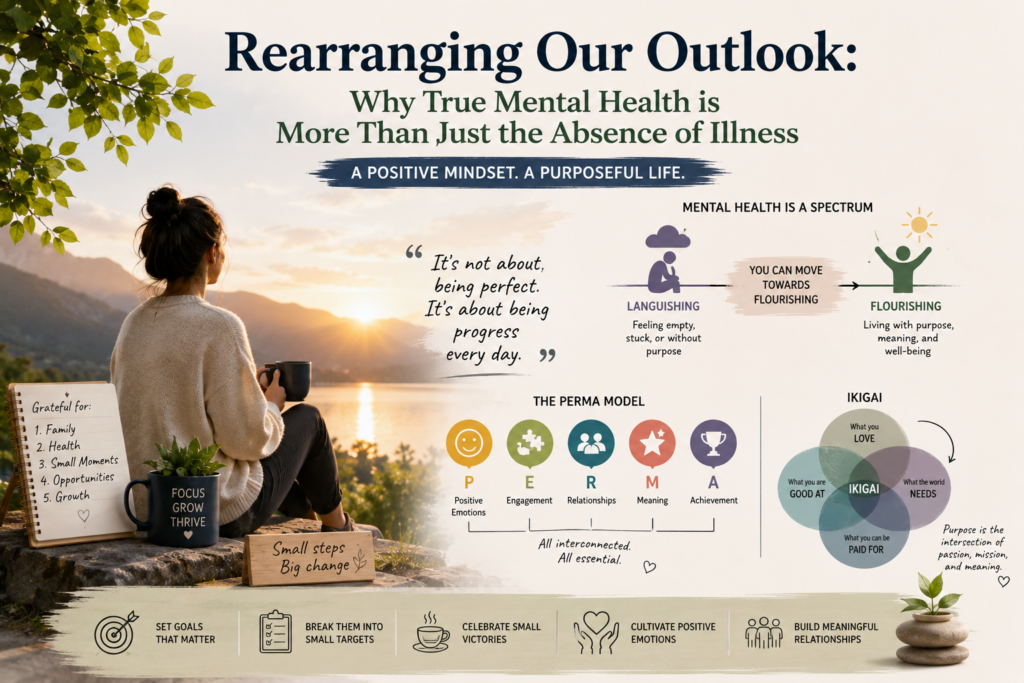
Positive psychology explains about how positive emotions broaden our mindset and aid in enhancing our creativity, problem solving, and resilience. This allows us to be more open towards new experiences, build new skills, and embrace life with a positive outlook, which allows for a better long-term development for us.

Adding this concept does not require a month of preparation from our side. Instead, it can start with something as simple as adding a tradition of reminding ourselves of five things we are grateful for. This activity allows us to feel emotions like gratefulness and contentment, which in addition allows for positive thinking and helps us sleep better.


Languishing vs. Flourishing

Positive psychology also talks about a very important concept put forth by Dr. Corey Keyes, who explains that the absence of mental illness does not mean the presence of mental health. He explains it through two terms: languishing and flourishing.

Both these terms fall on the opposite ends of a spectrum, and the presence of one implies the absence of another:

  • Flourishing refers to a state of optimal human functioning, which is at the opposite end of the continuum to mental illness. It explains complete mental health and wellness.
  • Languishing is characterized by a feeling of emptiness or melancholy. Though it does not necessarily mean a mental illness, it does mean that there is little purpose to life or zest for life.


Importance of Goals:

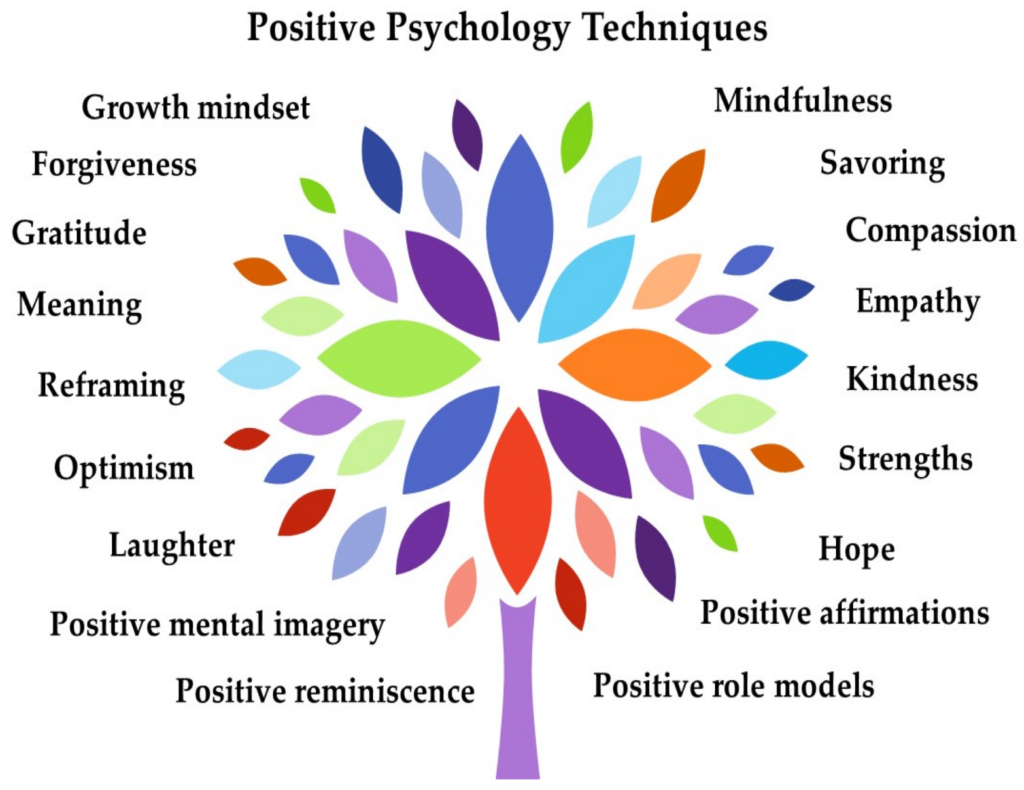
Positive psychology also puts emphasis on goals and their importance in life. Positive psychologists believe that goals are central to an individual’s personality, as they provide a meaning and direction to their life. With the help of positive emotions like compassion, mindfulness, optimism, and positive affirmations, one can work in the direction of achieving their goals and set small targets.

These small targets, once completed, will help the person come closer to their main goal and also provide them with a sense of accomplishment.

The Importance of Small Targets

An activity that we can actively follow, and that does not require any resources from our side, is that in the evening while having evening tea, think about one good deed we did. It could be as small as pouring the tea without letting it spill, waking up early, or talking politely even when feeling a bit angry.

This exercise reminds us that we do not always need bigger achievements to applaud ourselves, but we can get that feeling through smaller and simpler tasks as well. It also shows that life does not have to be so complex as we have made it; it can be simpler if we want to make it.

The PERMA Model and Ikigai
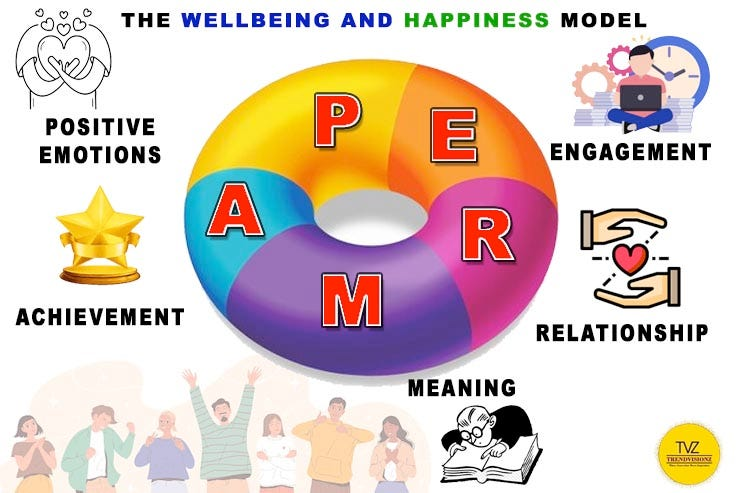


This model was derived by Martin Seligman to understand human well-being and happiness. Without going into the therapeutic aspect, we will simply understand its practical nature. This model emphasises on five very important aspects to understand human well-being:

  • Positive emotions
  • Engagement
  • Relationships
  • Meaning
  • Achievement

I will condense all these concepts into a single concept for everyone to understand it better using a recent experience of mine. I recently read the book Ikigai, which means “the art of being busy,” literally.

It is so important to be engaged in today’s life because a person without any purpose feels his life has no purpose. If we are engaged in any sort of activity which we deem as important, we are more likely to feel a sense of achievement. With achievement, this engagement would also give our life a sense of purpose and meaning, which would allow positive emotions to fly in and thus also help in relationship building.

This is my understanding and version of the model. You might look at it in the opposite or different sense, but what I wish to imply is that all these terms are interrelated. Positive psychology implies that one starts from a smaller purpose. With the help of positive emotions that he feels in life due to that goal’s accomplishment, he attains more such smaller goals and gradually a bigger goal.

These goals in life big or small, monetary or not should provide the person with a sense of satisfaction. For example, a goal completion for a non-reader could be to read a book, which is a bigger goal. But through smaller goals like reading one page on day one and feeling a sense of accomplishment, he could gradually grow to reading ten pages a day, and thus these smaller goals will help him reach the larger goal: reading an entire book.

Blog By Aastha Jaggi 
Share on Facebook
Share on Twitter
Share on Pinterest
Share on WhatsApp

Leave a Reply

Your email address will not be published. Required fields are marked *

Post comment